
Examples
Contact US
Please feel free to contact us if you have any questions or suggestions!
FAQ Part 1
-
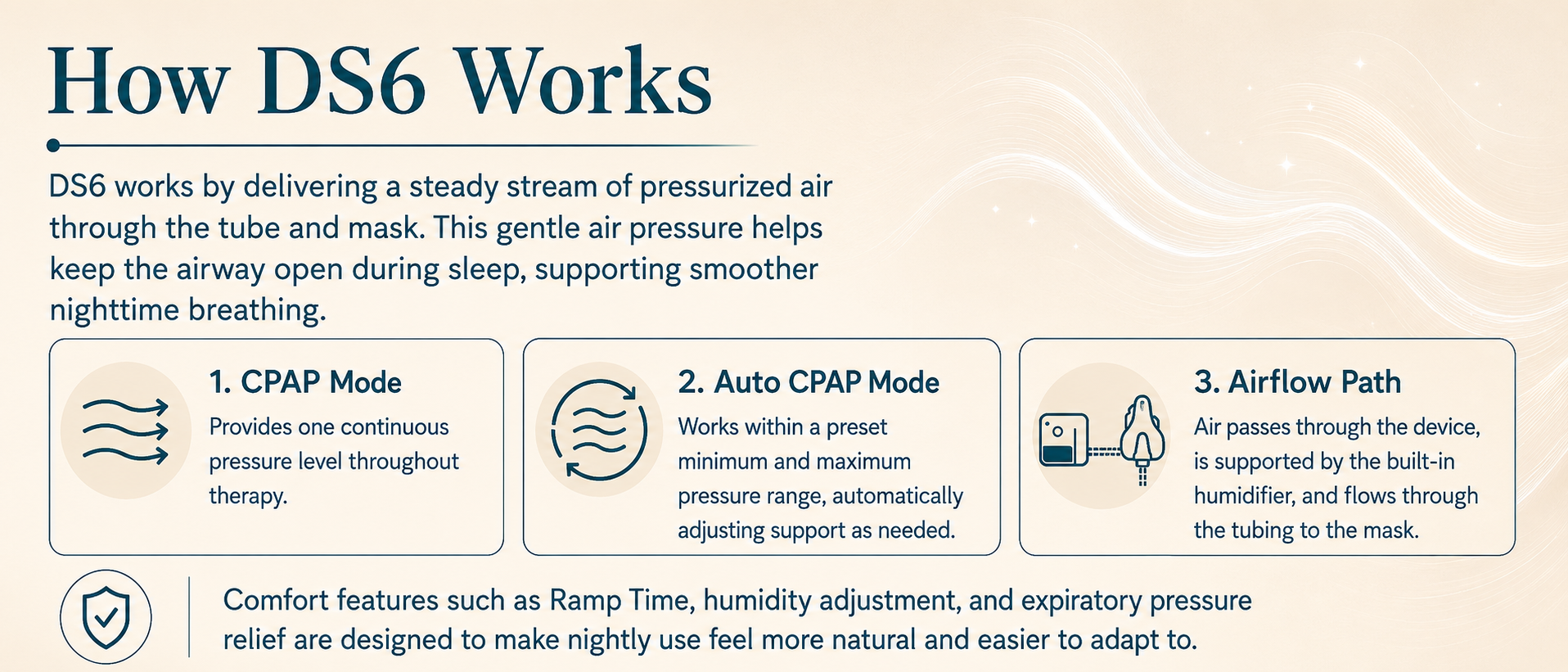
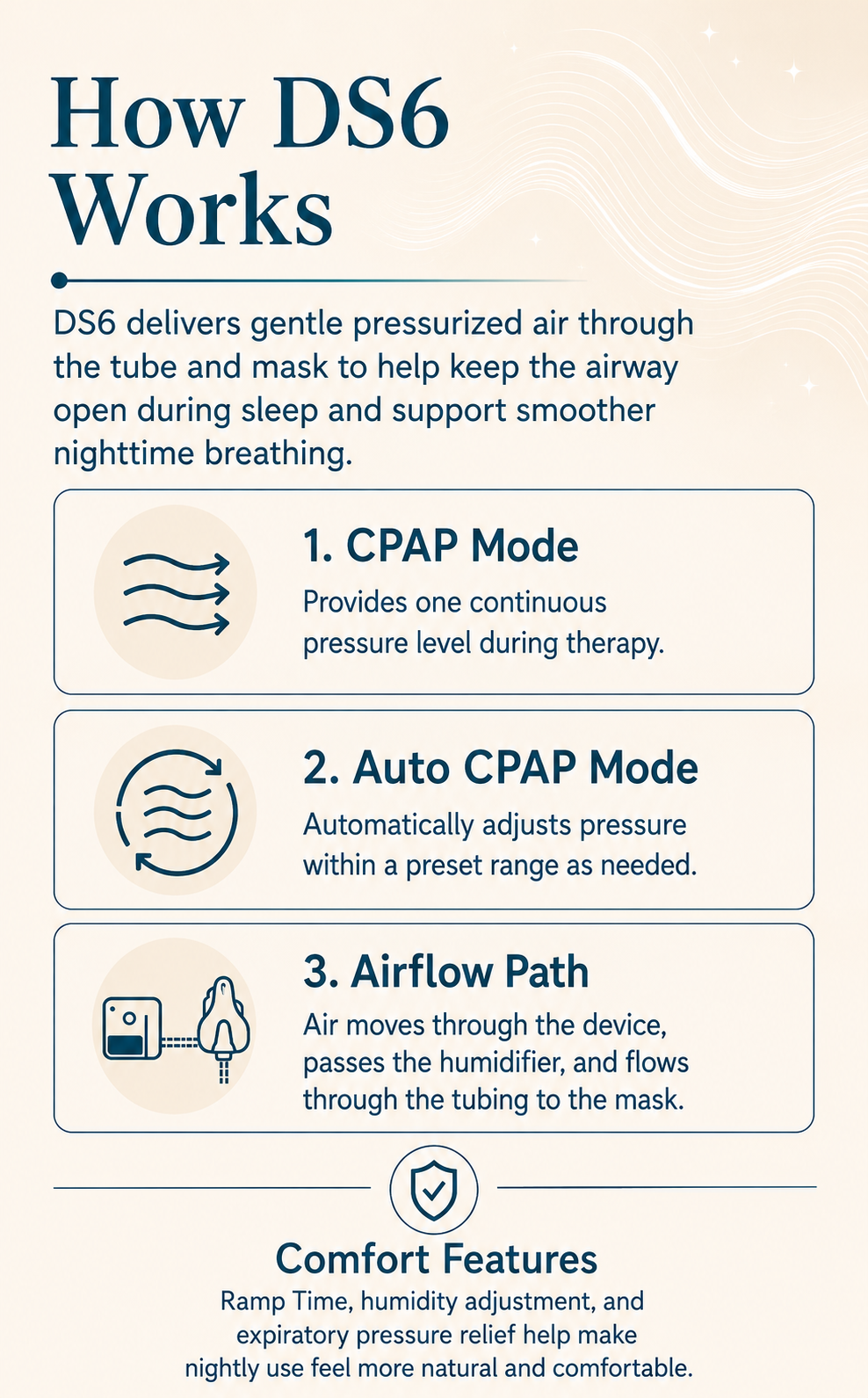
How does the DS6 CPAP machine work?
DS6 delivers a steady stream of pressurized air through the tube and mask to help keep the airway open during sleep. It is not an oxygen machine; it provides breathing support through air pressure.
-
What situations is DS6 mainly designed for?
DS6 is designed to support people who experience snoring, interrupted breathing, or sleep apnea-related symptoms during sleep. It should not be described as a cure for any disease.
-
Is DS6 an oxygen machine?
No. A CPAP machine delivers pressurized room air, not oxygen therapy. Unless an oxygen source is connected separately, it should not be described as an oxygen machine.
-
Do users need medical advice before using DS6?
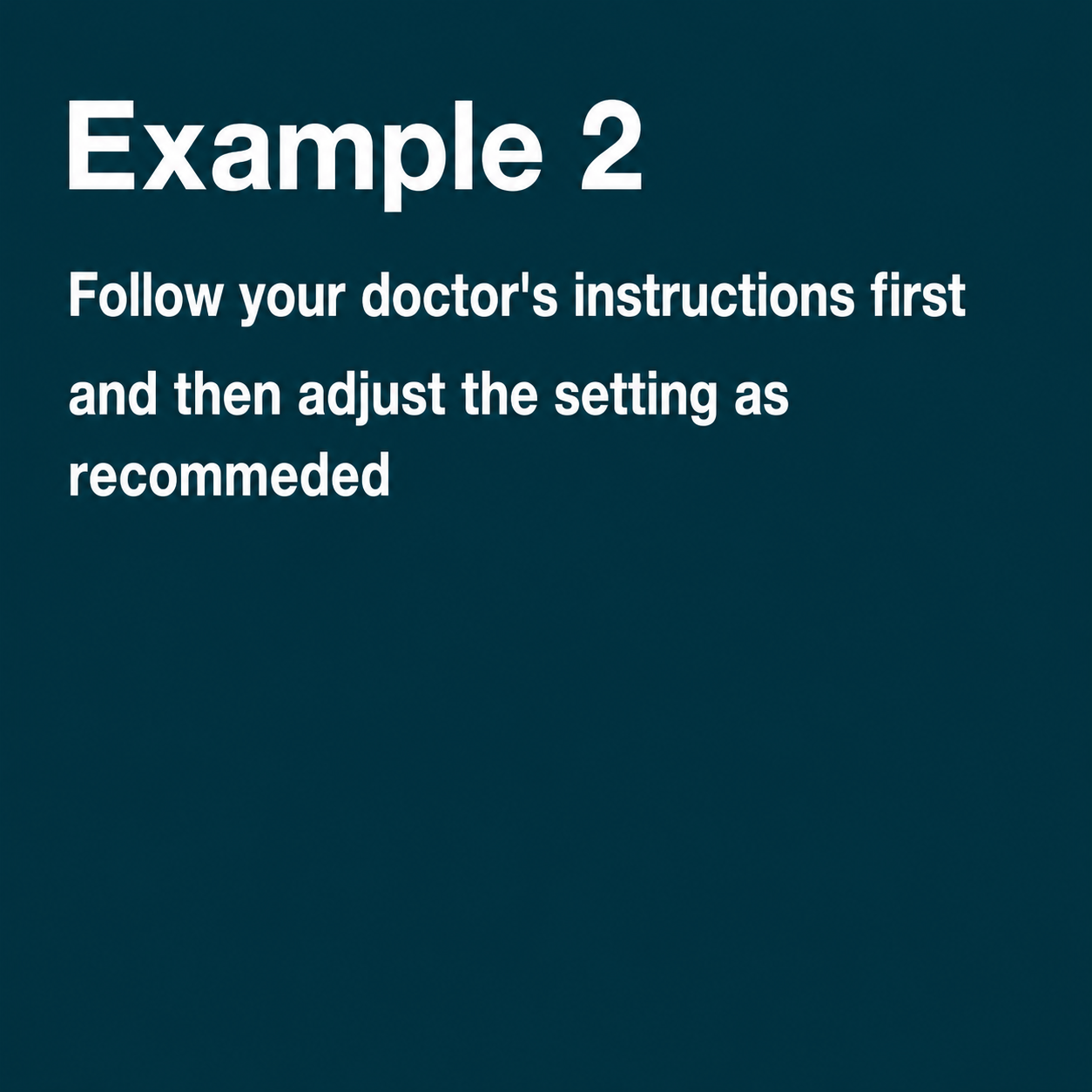
If users already have prescribed settings or a sleep report, they should follow their doctor’s instructions first. New users with severe or undiagnosed symptoms should consult a doctor or sleep specialist.
-
What is the difference between CPAP mode and Auto CPAP mode?
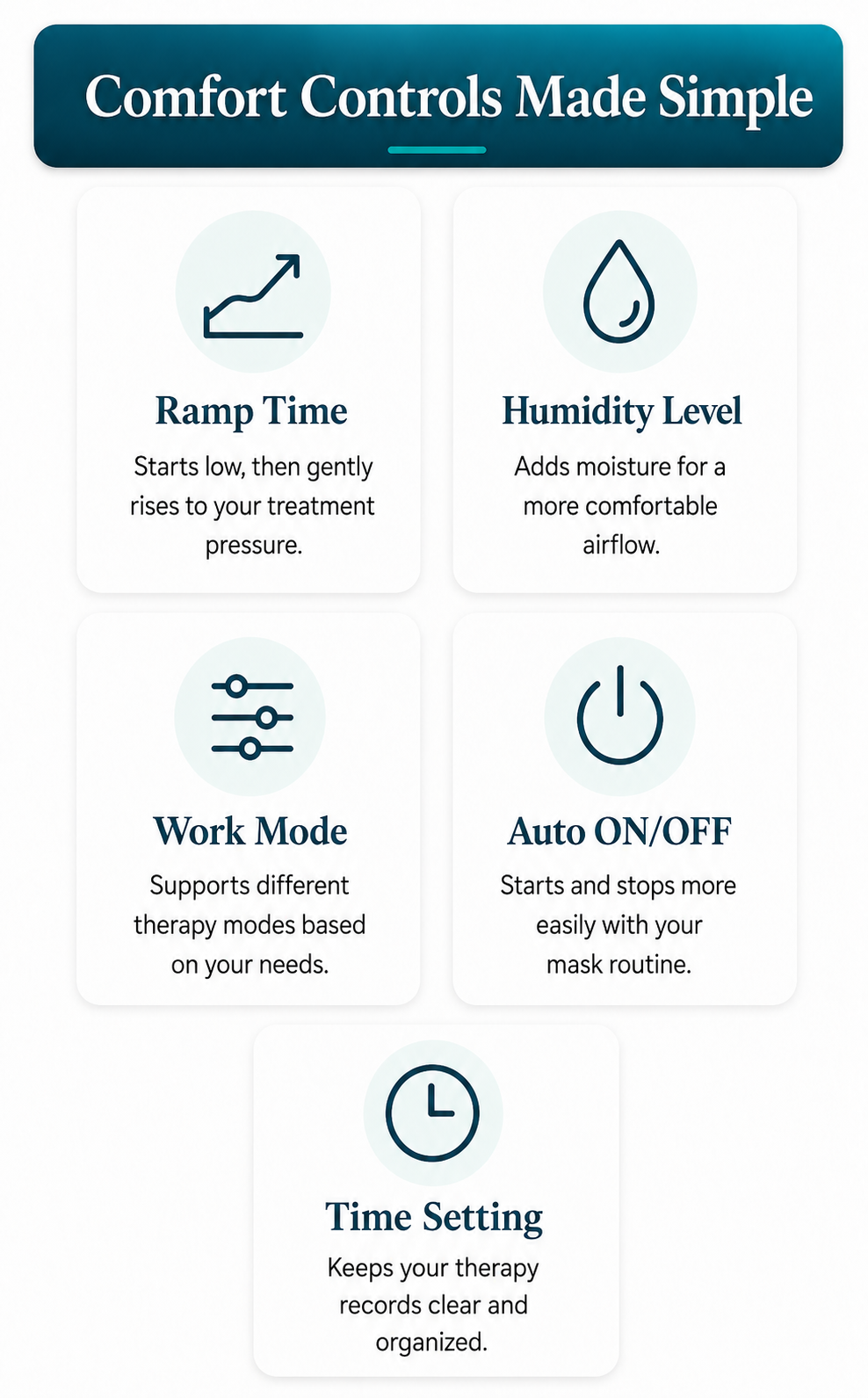
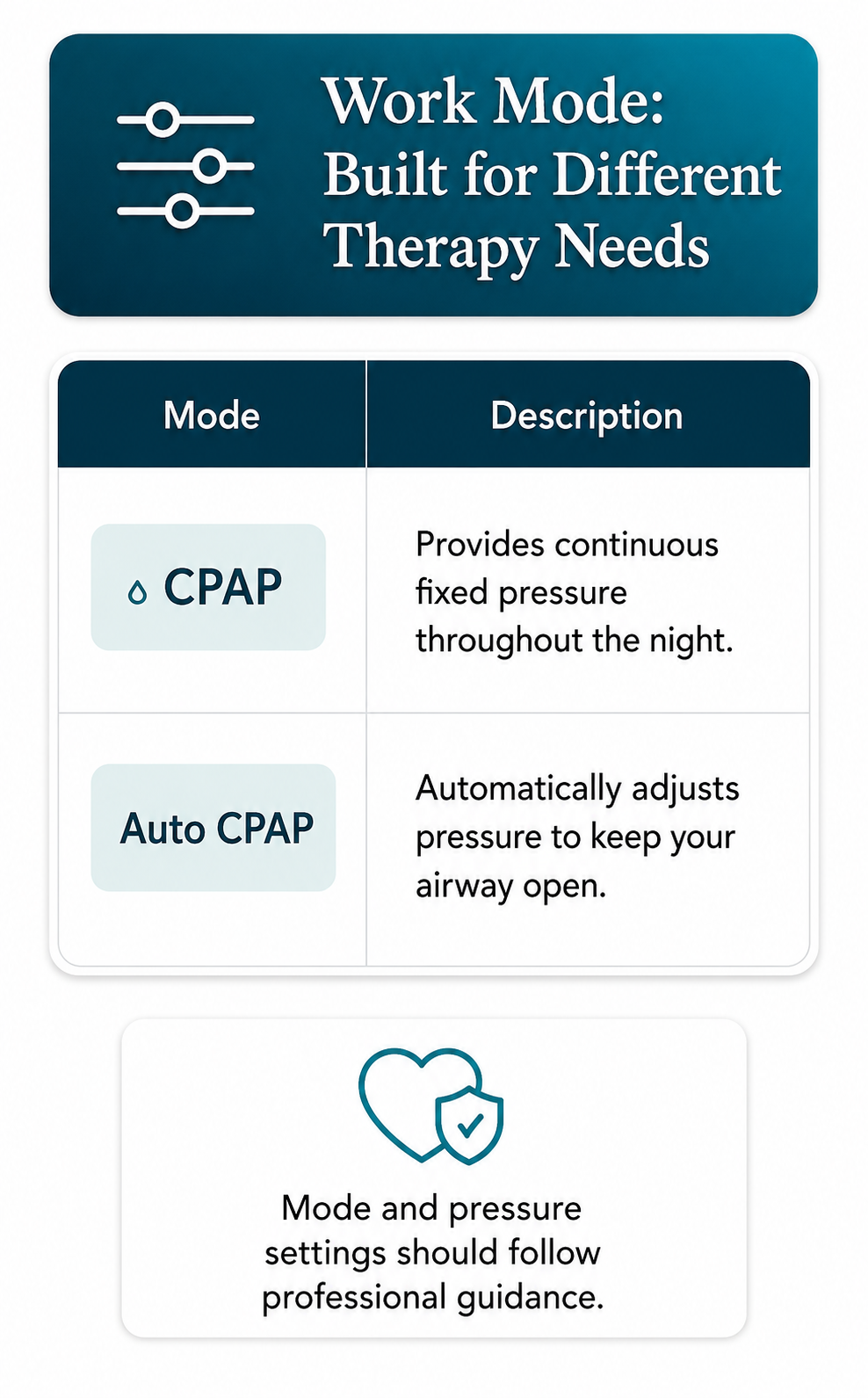
CPAP mode provides one fixed pressure level. Auto CPAP mode adjusts pressure automatically within the set minimum and maximum pressure range based on breathing needs during sleep.
-
When should users choose CPAP mode?
CPAP mode is suitable for users who already know their fixed pressure setting, such as those with prescribed settings or previous experience using a fixed-pressure CPAP machine.
-
When should users choose Auto CPAP mode?
Auto CPAP mode is suitable for users whose pressure needs may change during the night, or for users who prefer automatic adjustment within a set range. Doctor’s instructions or previous settings should still come first.
-
What do Min Pressure and Max Pressure mean in Auto CPAP mode?
Min Pressure is the lowest pressure the machine starts from in Auto CPAP mode. Max Pressure is the highest pressure the machine is allowed to reach. The machine does not stay at the maximum all night; it adjusts within the set range.
-
Is a higher Max Pressure always better?
No. Pressure that is too high may cause mask leaks, bloating, discomfort when exhaling, or waking up from airflow. Pressure that is too low may provide insufficient support. Pressure should be adjusted based on medical guidance, previous settings, comfort, and sleep report data.
-
What should new users do if they do not know their pressure settings?
There should not be one universal pressure setting for everyone. Users should follow doctor’s instructions first. If no prescribed setting is available, they may start with gentle comfort settings and adjust gradually based on comfort and sleep report data.
-
How should previous CPAP users set up DS6?
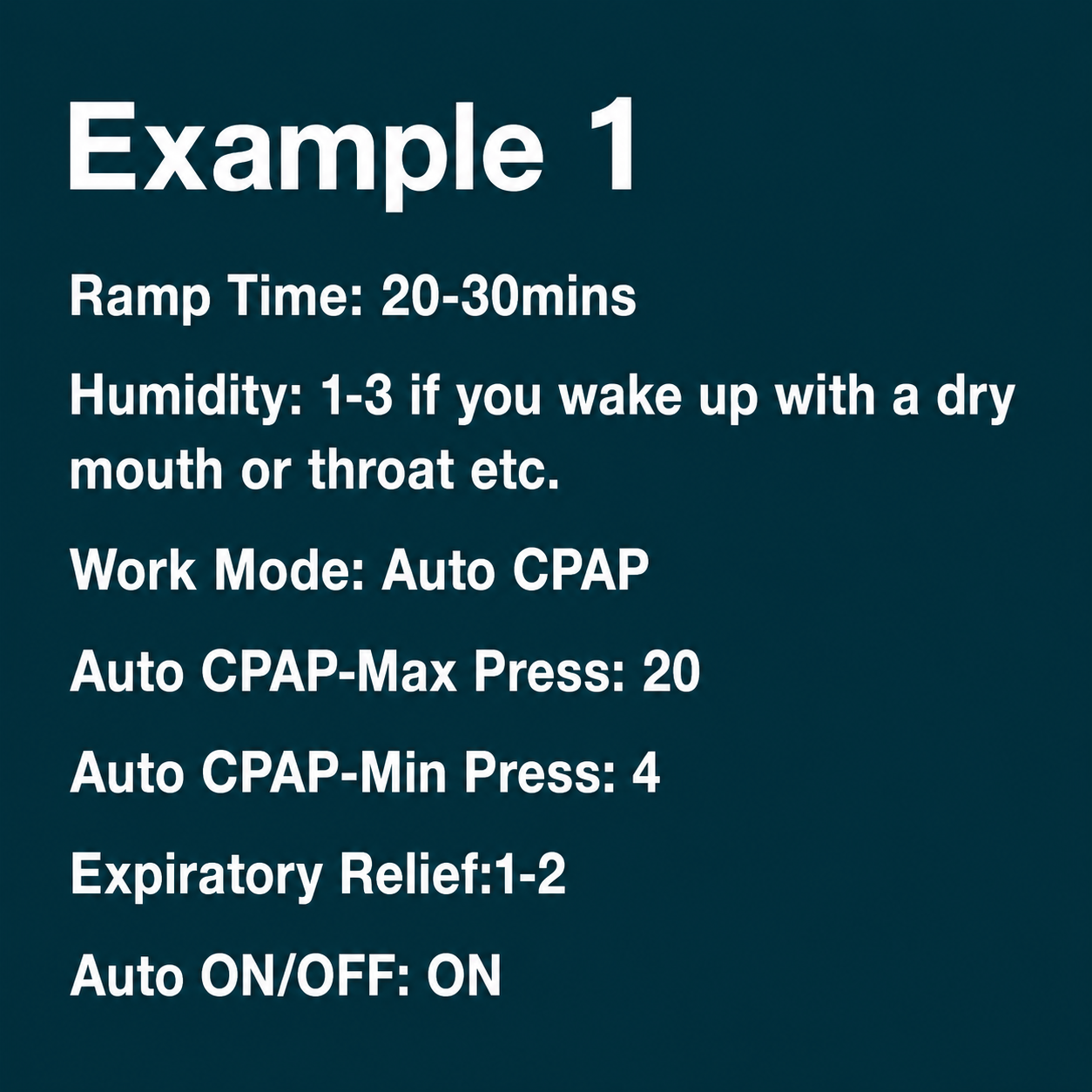
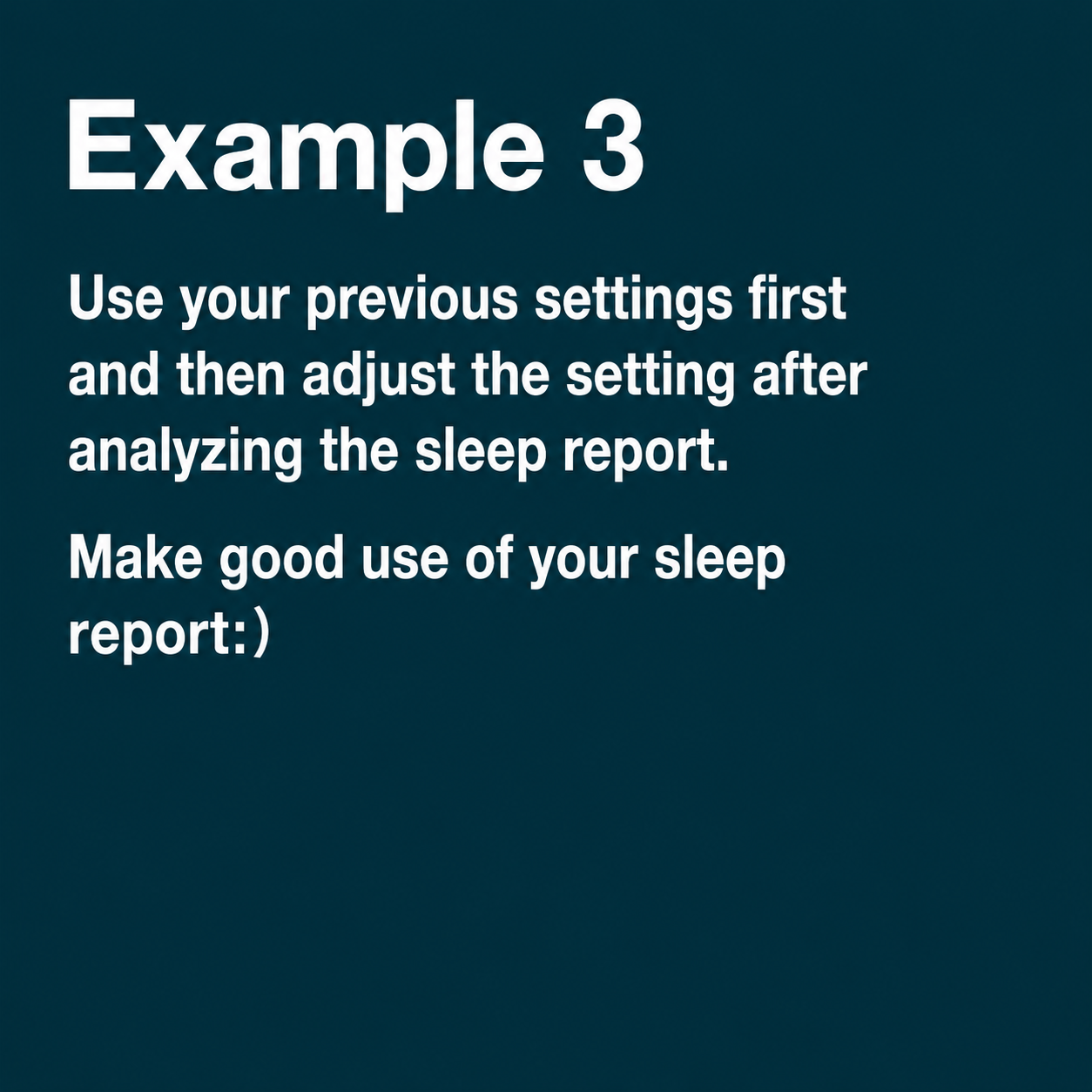
Previous CPAP users should start with their previous machine settings, including mode, pressure range, Ramp Time, humidity, and Expiratory Relief. They can then fine-tune based on DS6 sleep report data and comfort.
-
What does Ramp Time do?
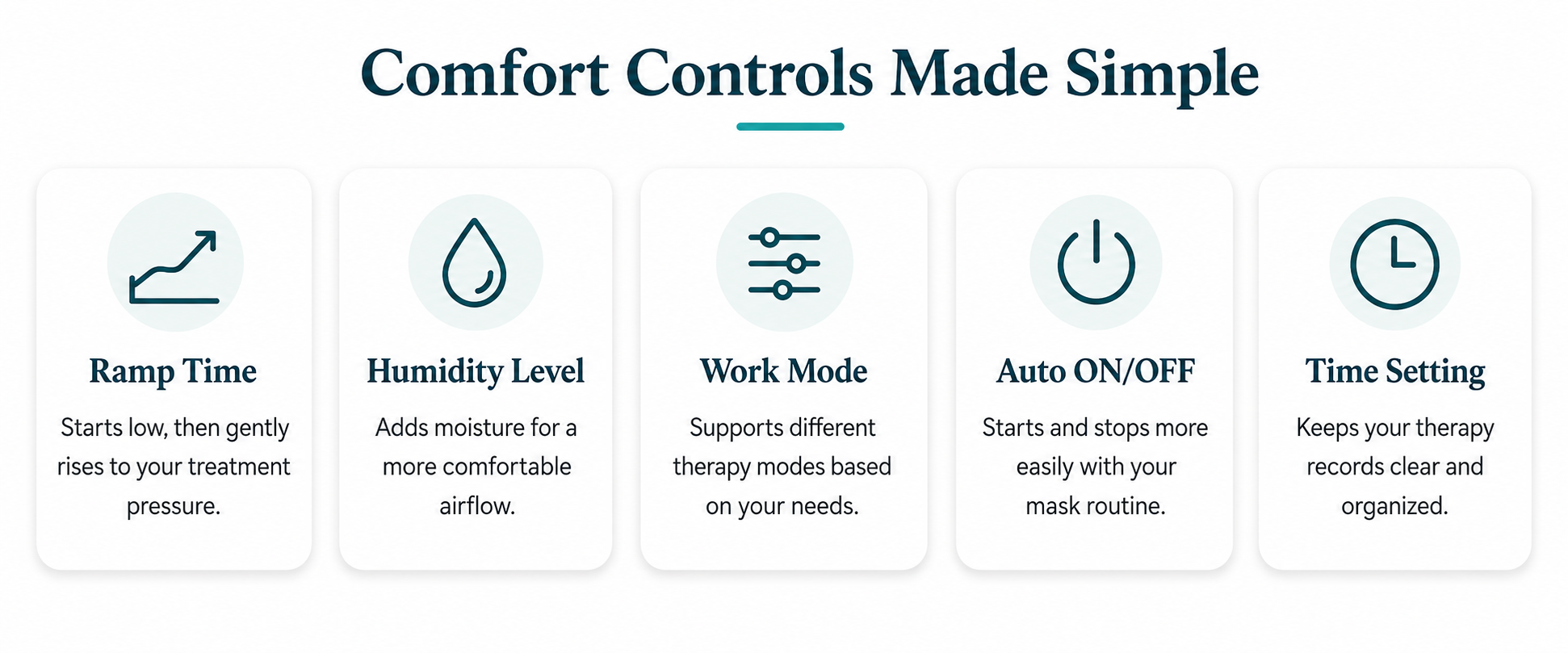
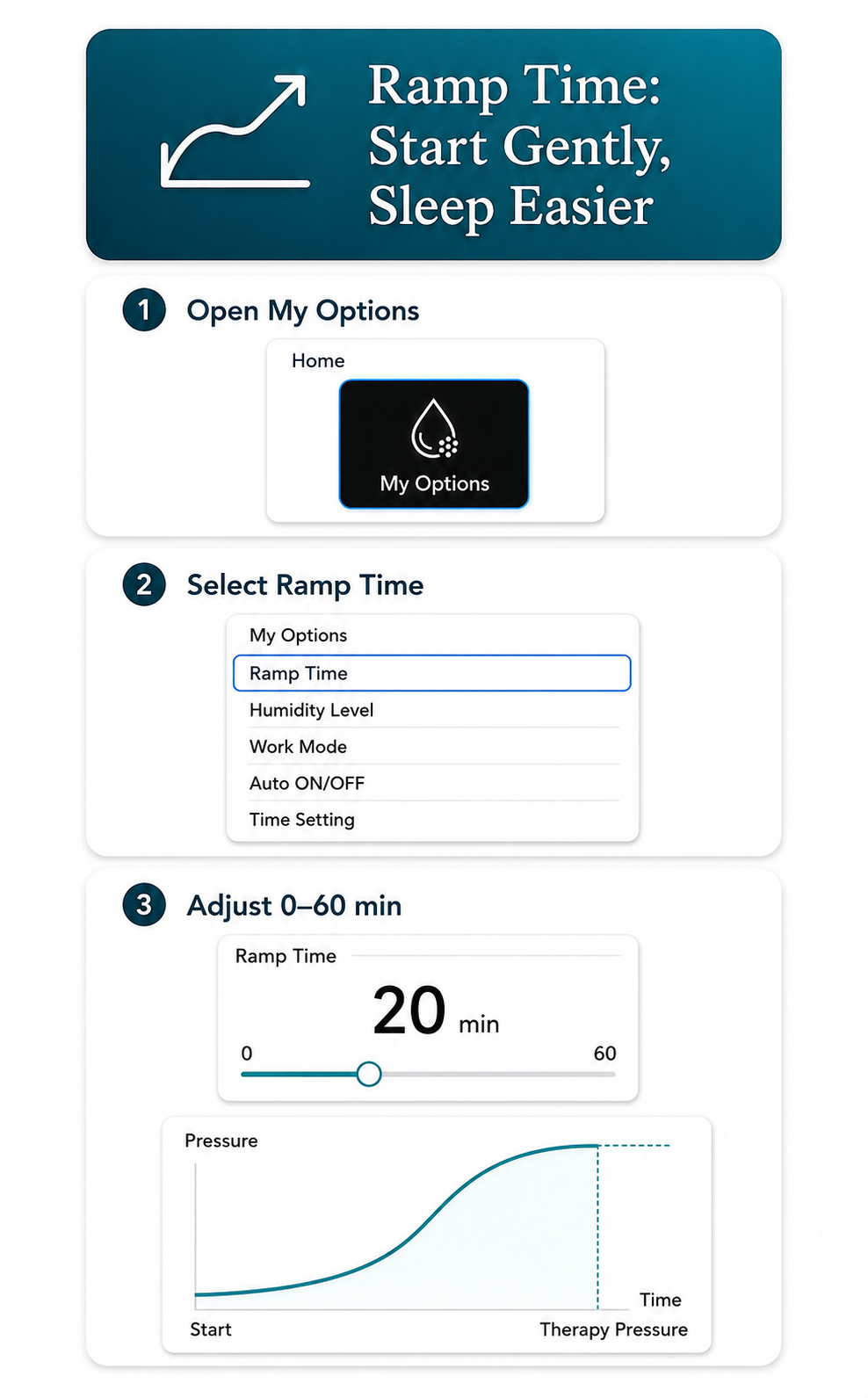
Ramp Time is a comfort feature for falling asleep. It starts the machine at a lower pressure and gradually increases to the target pressure or the Auto CPAP minimum pressure, helping users adapt to airflow more comfortably.
-
Will the machine stop after a 20-minute Ramp Time?
No. The 20 minutes only refer to the gradual pressure increase period. After Ramp Time ends, the machine continues normal pressure support instead of turning off.
-
How long should Ramp Time be set?
Ramp Time should be adjusted based on how quickly the user falls asleep and how sensitive they are to pressure. New or pressure-sensitive users may prefer a longer ramp, while fast sleepers should avoid setting it too long.
-
What is Expiratory Relief, and how should users understand levels 0, 1, 2, and 3?
Expiratory Relief lowers pressure slightly during exhalation to make breathing out feel more natural. Level 0 means off; 1 provides mild relief; 2 provides moderate relief; 3 provides stronger relief. Many users can start with 1–2, and only consider 3 if exhaling still feels difficult while monitoring comfort and sleep report data.
-
Is a higher Expiratory Relief level always better?
No. Expiratory Relief is mainly a comfort feature. A higher level is not always better and may affect how pressure feels for some users. It should be adjusted gradually based on exhalation comfort and sleep report data.
-
What does Humidity Level do?
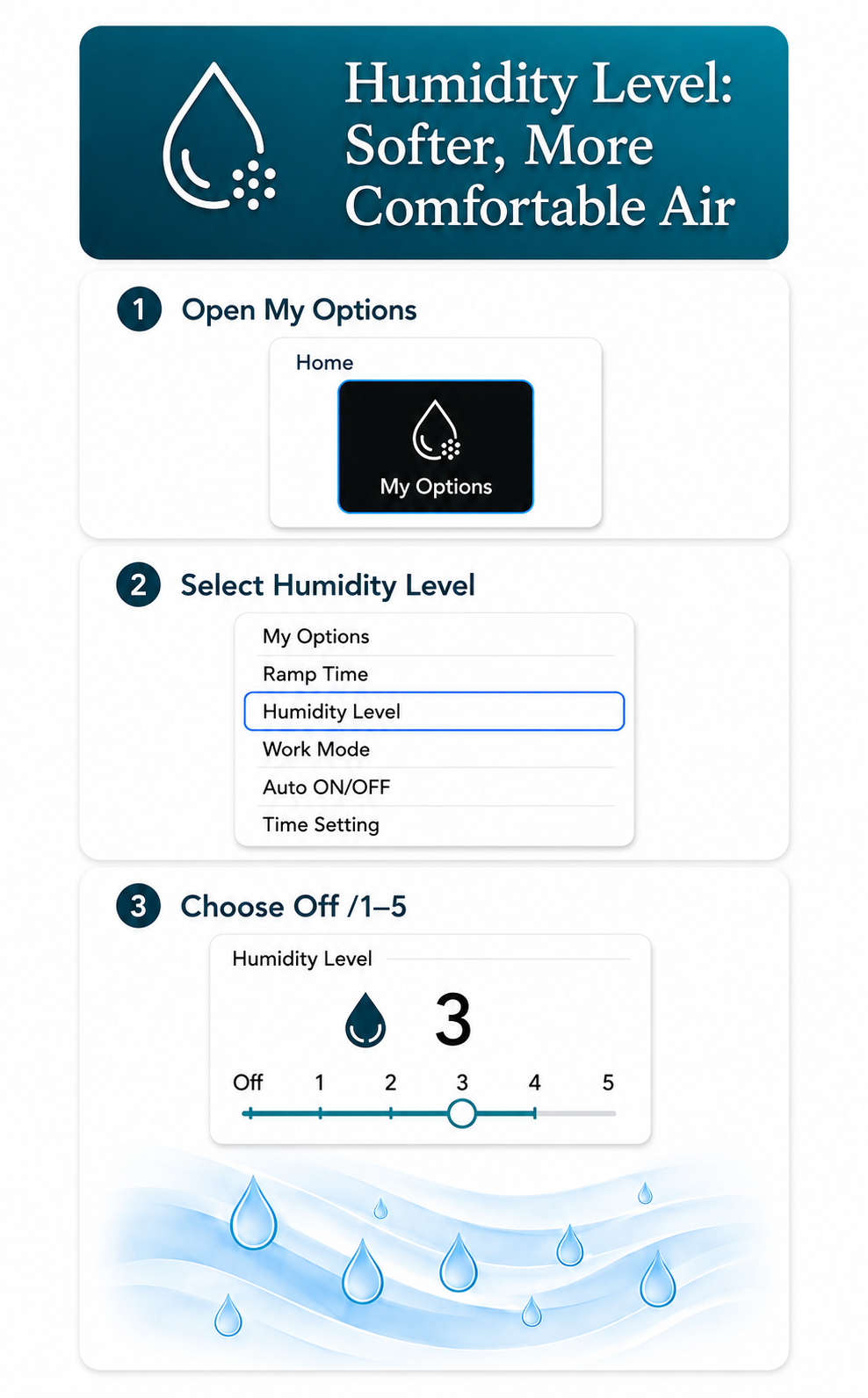
Humidity Level adds moisture to the airflow, helping reduce dryness in the nose, mouth, and throat and making the air feel softer. Increase the humidity level if you wake up feeling dry, and lower it if moisture collects in the tube or mask.
-
When should users increase or decrease humidity?
Users may increase humidity gradually if they wake up with a dry mouth, dry throat, or dry nose. If moisture, condensation, or water sounds appear in the mask or tube, humidity should be reduced. Higher humidity is not always better.
-
Does dry mouth always mean humidity is too low?
Not always. Dry mouth may also be caused by mouth breathing, mask leaks, poor mask fit, or uncomfortable pressure. Users should check humidity, mask seal, and mouth breathing together.
-
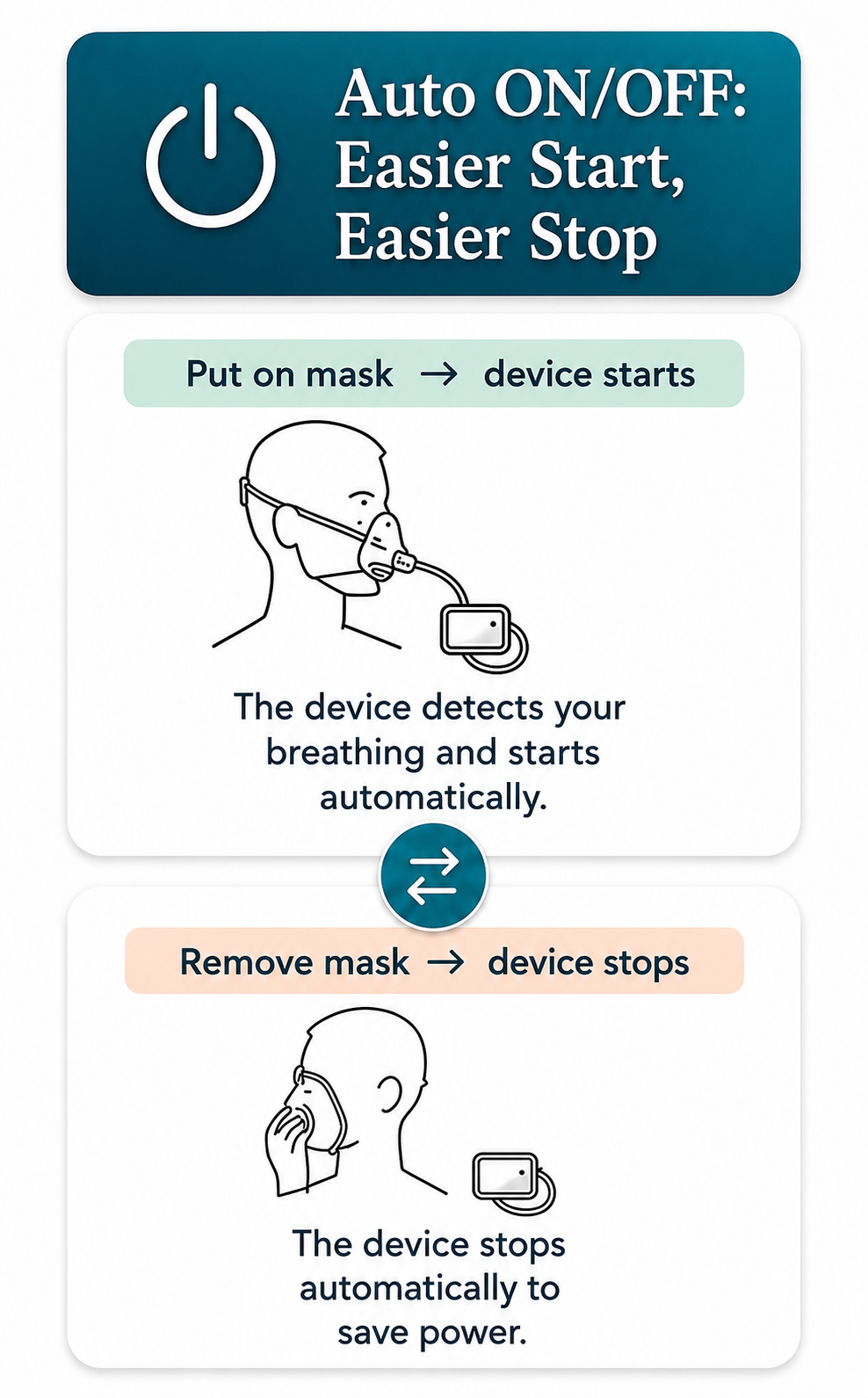
What does Auto ON/OFF do?
Auto ON/OFF helps the machine start when the user begins breathing through the mask and stop when the mask is removed, reducing manual operation and making daily use easier.
FAQ Part 2
-
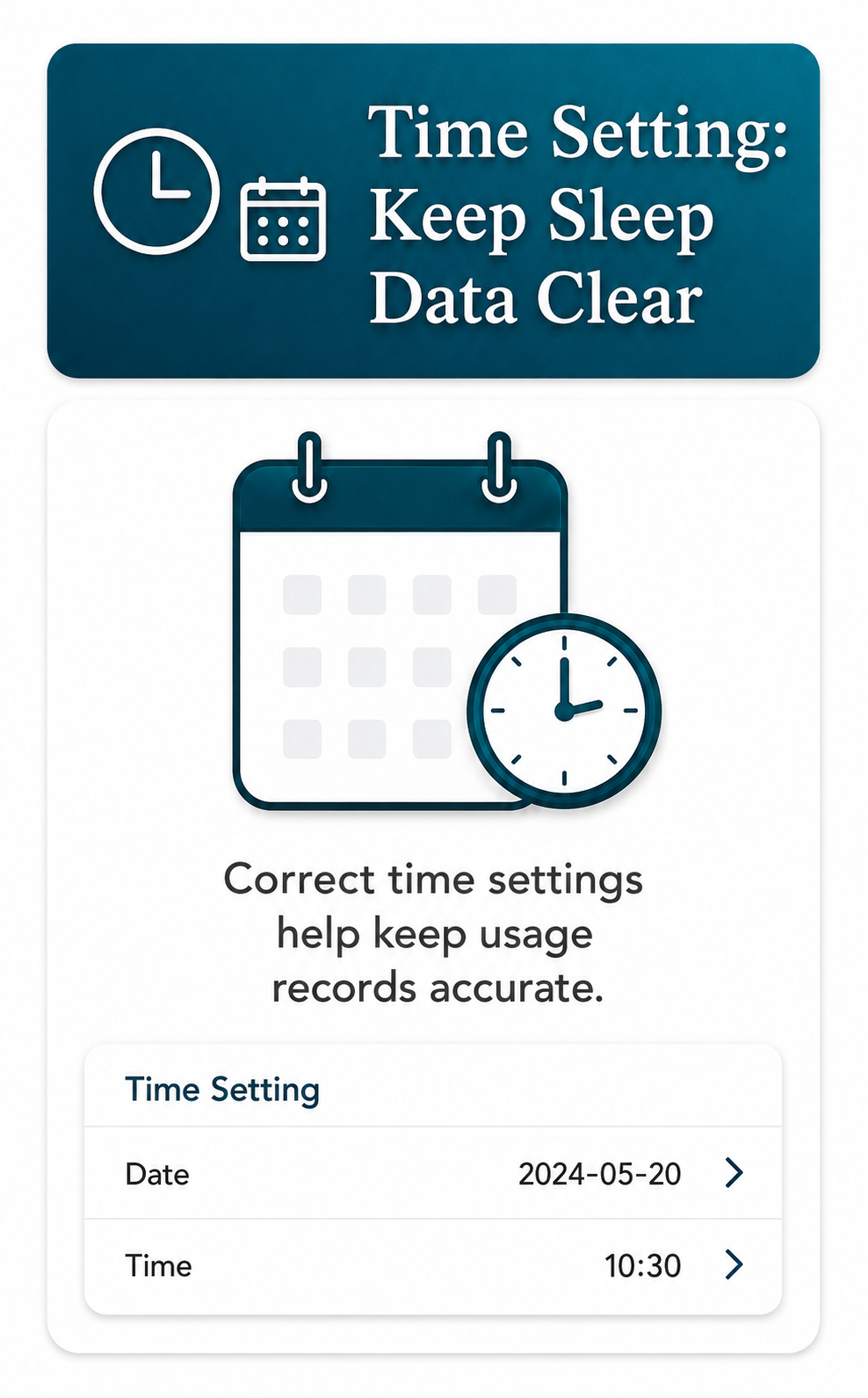
What are Time Setting and Sleep Report used for?
Time Setting keeps sleep data timestamps accurate. Sleep Report helps users review usage time, pressure changes, mask leaks, and overall performance. It can guide adjustments, but it does not replace medical diagnosis.
-
What problems can mask leaks cause?
Mask leaks may reduce pressure support, increase noise, cause dry mouth, affect sleep report accuracy, or wake users up from airflow. Users should first check mask fit, headgear tightness, and tube connection.
-
Who is a nasal mask suitable for?
A nasal mask is suitable for users who mainly breathe through the nose and prefer a lighter mask. If users often breathe through the mouth during sleep, a nasal mask may lead to dry mouth or leaks.
-
What should users do if the mask leaves marks or feels uncomfortable?
Users should first check whether the headgear is too tight. The mask needs a seal, but tighter is not always better. It should be adjusted to stay sealed without causing strong pressure on the face.
-
What should users do if the airflow feels too strong when falling asleep?
Users can use Ramp Time to let pressure rise gradually and use Expiratory Relief to improve exhalation comfort. They should also check whether the pressure range is too high or the mask is leaking.
-
If users wake up from airflow, should they immediately lower the pressure?
Not immediately. Users should first check mask leaks, Ramp Time, Expiratory Relief, humidity, and mask comfort. If the issue continues, they can review the sleep report or consult medical guidance before adjusting pressure.
-
What should users do if they feel bloated after using CPAP?
Bloating may be related to high pressure, swallowing air, or mask leaks. Users should check mask seal and pressure settings instead of increasing pressure blindly. If discomfort continues, they should consult a doctor.
-
How should users use and maintain the water chamber?
Users should use clean water and clean the water chamber according to the manual. It is safer to empty remaining water daily and keep the chamber dry to avoid odor or contamination.
-
What does the Air Filter do, and when should it be replaced?
The Air Filter helps reduce dust and particles entering the machine and airflow path. Replacement timing should follow the DS6 manual. If the filter becomes dirty, discolored, or blocked, it should be replaced.
-
Do the mask, tube, and water chamber need regular cleaning?
Yes. The mask contacts the skin, and the tube and water chamber contact airflow and moisture. They should be cleaned, rinsed, and dried regularly according to the manual. Strong corrosive cleaners should not be used.
-
Can DS6 be used while traveling?
Yes. DS6 can be carried for nighttime breathing support while traveling. Users should check the power adapter, tube, mask, water chamber, filter, and travel bag before leaving, and confirm power compatibility at the destination.
-
What should users confirm before buying?
Users should confirm whether they already have medical guidance or previous CPAP settings, and whether they can adapt to a nasal mask, tube, humidification, and pressure support. CPAP is not a one-time fix; it requires consistent and proper use.